World News
“Should Not Have Happened”: Donald Trump Criticises Israel’s Beirut Strike As Iran Peace Deal Hangs In Balance…
US President Donald Trump has urged restraint after an Israeli airstrike in southern Beirut, warning that escalating tensions could derail ongoing efforts toward a broader peace agreement with Iran.

At a time when hopes for diplomacy in the Middle East appeared to be gaining momentum, fresh military action has once again cast uncertainty over the region’s future.
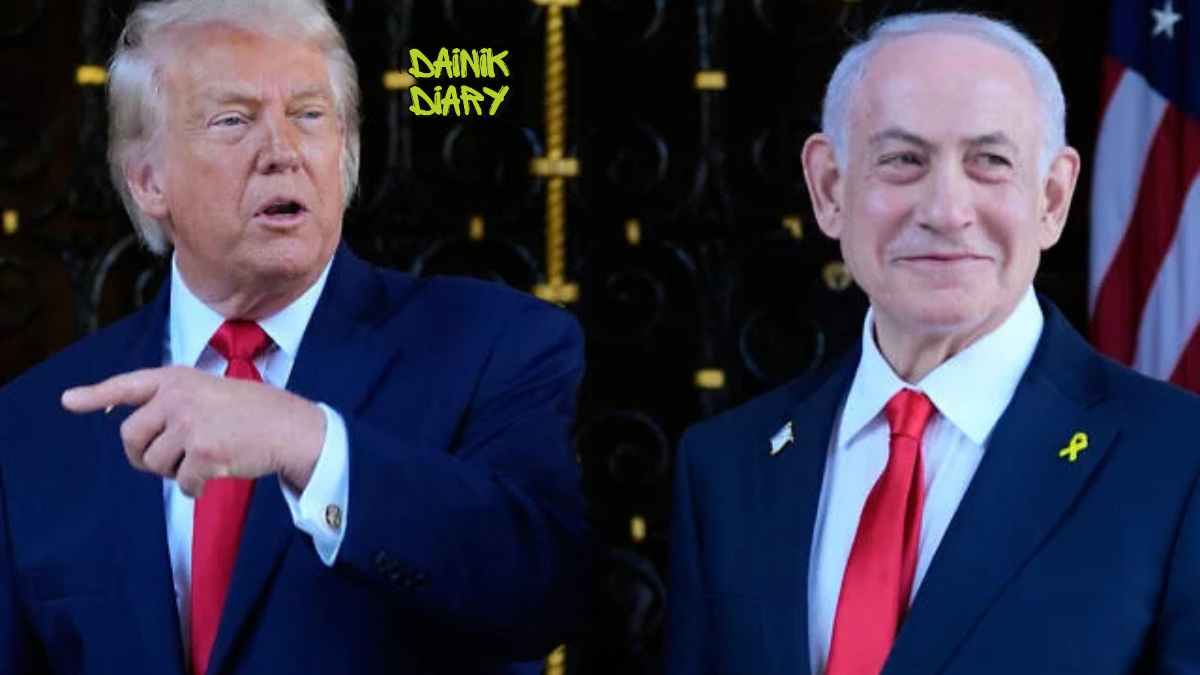
On Sunday, US President Donald Trump publicly criticized Israel’s latest airstrike in southern Beirut, saying the attack “should not have happened”—particularly when negotiators were reportedly close to reaching a peace deal involving Iran.
The remarks came after Israel carried out strikes in the southern suburbs of the Lebanese capital, an area widely regarded as a stronghold of the Iran-backed group Hezbollah.
Trump Calls For Restraint Amid Rising Tensions
Taking to his social media platform Truth Social, Donald Trump urged all parties to avoid further escalation, emphasizing that military actions at such a sensitive moment could jeopardize broader diplomatic efforts.
“The attack on Beirut should not have happened,” Trump wrote, adding that negotiators were “so close to a Peace Deal with Iran.”
ALSO READ : Sensex Jumps 1,200 Points, Nifty Surges 1.5%: Is a ‘Trump-Iran Deal’ Behind Today’s Market Rally?
The statement marks a notable moment in the ongoing Middle East crisis, as Washington attempts to balance regional security concerns with diplomatic engagement.
Analysts believe Trump’s comments reflect growing concerns within the United States administration that renewed violence could undermine months of behind-the-scenes negotiations.
Why The Beirut Strike Matters
The latest strike targeted southern Beirut, often referred to as Dahieh, a district closely associated with Hezbollah. The group, backed by Iran, has long been at the center of regional tensions involving Israel.
Military actions in this area frequently carry wider geopolitical consequences, given the delicate balance between regional powers and the risk of broader conflict.
For many observers, the timing of the strike is particularly significant. Diplomatic channels aimed at reducing tensions between Iran and the United States have reportedly shown signs of progress in recent weeks.
However, renewed military activity could complicate those efforts.
A Fragile Peace Process
While details of any potential agreement remain limited, Donald Trump has repeatedly expressed optimism about achieving a broader peace framework in the Middle East.
One key aspect of such discussions reportedly involves easing tensions involving Iran and securing stability across critical trade routes and strategic regions.

Yet history has shown that diplomacy in the Middle East is rarely straightforward.
From disputes over regional influence to security concerns surrounding armed groups, multiple factors continue to challenge efforts toward lasting peace.
The latest developments underscore how quickly negotiations can be affected by events on the ground.
The World Watches Closely
As regional tensions simmer, global leaders and markets are closely monitoring developments in Lebanon, Israel, and Iran.
Any further escalation could have consequences extending far beyond the Middle East, affecting energy markets, international trade routes, and diplomatic relations worldwide.
For now, Donald Trump’s call for restraint highlights a growing recognition that military action and diplomacy often move on parallel tracks—and one can easily disrupt the other.
Whether the current peace efforts survive this latest setback remains uncertain, but one thing is clear: the road to stability in the Middle East remains as complex as ever.