
Tech
Nothing Phone (3) Changes Its Most Famous Feature but Does the Bold New Direction Actually Work?
Nothing’s first premium flagship replaces the familiar Glyph light strips with an interactive display, introduces four 50MP cameras and offers longer software support—but its ambitious price creates difficult questions.


that Carl Pei’s technology company wants to move beyond being an unusual alternative in the mid-range market and compete directly with established premium smartphone brands.
Nothing has revised almost every major part of its flagship formula, including the transparent design, rear notification system, cameras, processor, battery and software policy.
Some changes make the Phone (3) a more complete everyday device. Others, particularly its unconventional rear design and premium launch price, are likely to divide opinion.
The important question is no longer whether the Phone (3) looks different. It clearly does. The real question is whether those differences make it a better smartphone.
Glyph Matrix replaces Nothing’s signature light strips
The most noticeable change is the removal of the long Glyph Interface light strips found on the Phone (1) and Phone (2).
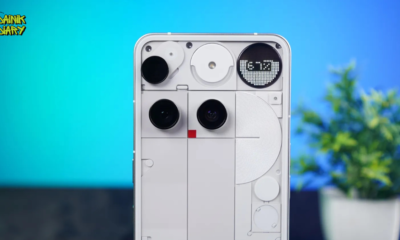
Nothing has replaced them with the Glyph Matrix, a small circular display positioned in the upper-right corner of the phone’s rear panel. It contains 489 individually controlled micro-LEDs capable of producing simple images, text, symbols and animations.
Unlike the earlier Glyph lights, which primarily indicated calls, notifications, timers and charging progress, the new Matrix can display considerably more information.
Users can check the time, battery level and volume without turning on the main screen. It can also show contact-specific alerts, act as a countdown timer and run small interactive tools called Glyph Toys.
ALSO READ : Oppo Reno 16 BabyMonster Edition Coming to India: K-Pop Fans Could Get a Special Surprise in the Box…
A touch-sensitive button on the back allows users to interact with these features.
This change matters because it turns the Glyph system from a collection of decorative lights into a miniature secondary interface. It is still playful, but it now has the potential to become genuinely useful.
Whether users continue engaging with it after the initial novelty fades will depend on how consistently Nothing and third-party developers add practical functions.
A bolder—and more controversial—rear design
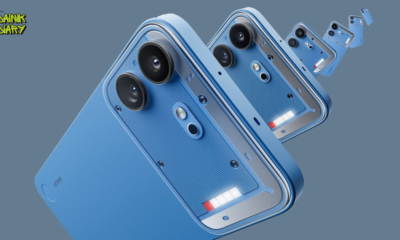
Nothing has retained the transparent-inspired appearance that made its earlier phones recognisable, but the internal-style elements are arranged differently.
The three rear cameras no longer sit together inside a conventional camera island. Instead, the lenses appear separately across the upper section of the back panel, creating an intentionally asymmetrical layout.
It is a design that refuses to disappear into the crowd. From a distance, the Phone (3) is unlikely to be confused with an iPhone, Samsung Galaxy or Google Pixel.
That individuality is important for a relatively young company trying to establish a clear identity. However, the unusual camera placement is also one of the device’s most polarising decisions.
Some users will appreciate the industrial, retro-futuristic style. Others may find the arrangement unnecessarily busy.
At 218 grams and approximately 9mm thick, the Phone (3) also feels substantial. Its aluminium frame and glass construction give it a more premium character, while the introduction of an IP68 dust and water-resistance rating addresses an important weakness of previous models.
Display moves closer to flagship territory
The Phone (3) features a 6.67-inch flexible AMOLED display with a 1.5K resolution and an adaptive refresh rate of up to 120Hz.
The panel supports HDR content and is claimed to reach a peak brightness of 4,500 nits in limited conditions. In normal use, the improved brightness makes outdoor visibility stronger than on earlier Nothing phones.
Thin and symmetrical bezels help the device look modern from the front. Colours appear rich, scrolling is smooth and the higher resolution keeps text and images sharp.
The screen is one of the Phone (3)’s strongest everyday features. However, the absence of a fully variable LTPO panel may disappoint buyers comparing it with more expensive flagship devices that can reduce their refresh rates more aggressively to save power.
Snapdragon 8s Gen 4 brings speed—but raises a flagship question
Performance is handled by the Qualcomm Snapdragon 8s Gen 4, paired with either 12GB or 16GB of LPDDR5X RAM and up to 512GB of UFS 4.0 storage.
The processor delivers fast app loading, smooth multitasking and strong gaming performance. For most users, it provides more power than they are likely to require during normal daily use.
However, the Snapdragon 8s Gen 4 sits below Qualcomm’s most powerful flagship platform. That distinction matters because the Phone (3) entered India at a premium launch price of ₹79,999 for the 12GB RAM and 256GB storage variant. The 16GB RAM and 512GB model was priced at ₹89,999.
At that price, buyers naturally compare it with phones carrying higher-end processors, more established camera systems and longer premium track records.
The Phone (3) does not feel slow. The concern is about value rather than everyday performance.
Nothing finally adds a serious zoom camera
Camera hardware receives one of the most meaningful upgrades.
The Phone (3) includes three 50-megapixel rear cameras: a primary camera with optical image stabilisation, an ultra-wide unit and a periscope telephoto camera offering 3x optical zoom. A fourth 50-megapixel camera sits on the front for selfies and video calls.
The addition of the periscope lens gives the phone far greater flexibility than earlier Nothing models. Users can capture portraits, distant objects and tighter compositions without relying entirely on digital cropping.
The primary camera generally produces detailed images with pleasing colours, while the ultra-wide camera offers a broader perspective. The ability to record 4K video at up to 60 frames per second across all four cameras further strengthens the package.
However, hardware is only part of the equation. Leading flagship cameras rely heavily on years of image-processing development. Nothing’s system is more versatile than before, but reviewers have found that processing can still be inconsistent in demanding light, particularly when compared with the best phones from Apple, Samsung and Google.
Larger battery for Indian buyers
The Indian version of the Nothing Phone (3) contains a 5,500mAh silicon-carbon battery, larger than the 5,150mAh unit supplied in some international markets.
It supports 65W wired charging, 15W wireless charging and reverse charging for accessories.
The higher-capacity battery helps the device comfortably handle a full day of mixed use, while the faster wired charging is a welcome improvement. Wireless charging is also important at this price, as its absence would have weakened Nothing’s flagship claim.
The charger, however, is not included in the retail box, meaning some buyers may need to purchase a compatible adapter separately to access the highest charging speed.

Essential Space expands Nothing’s AI strategy
The Phone (3) originally launched with Nothing OS 3.5, based on Android 15, continuing the brand’s clean and highly distinctive software design.
Its monochrome icons, dot-matrix typography and carefully designed widgets give the interface a personality that most Android skins lack. The software remains responsive and largely free from unnecessary pre-installed applications.
Nothing has also expanded Essential Space, its AI-powered organisation tool.
Using the dedicated Essential Key, users can capture screenshots, save voice notes and organise ideas. The Flip to Record feature allows the phone to record and summarise conversations when placed face down, although users must consider local consent and recording laws before using it.
These tools reflect Nothing’s attempt to make AI feel integrated rather than added as a collection of disconnected features. Their long-term value, however, depends on accuracy, privacy safeguards and whether users develop a habit of relying on them.
Software support receives a major upgrade
Nothing promised five years of major Android updates and seven years of security patches for the Phone (3), the company’s longest support commitment at launch.
This is an important improvement for a premium device. Buyers spending close to ₹80,000 expect their phones to remain secure and useful for several years.
The commitment also shows that Nothing understands a flagship cannot be judged only by launch-day specifications. Long-term support, repair access and consistent camera improvements are increasingly important parts of the ownership experience.
Why the Phone (3)’s new direction matters
The Phone (3) is Nothing’s attempt to evolve from an attention-grabbing challenger into a serious premium smartphone manufacturer.
Its Glyph Matrix, cleaner software, upgraded cameras, larger battery and IP68 protection make it the company’s most complete phone of its generation. It feels more ambitious and capable than its predecessors.
At the same time, the device enters a price category where originality alone is not enough.
Buyers can reasonably expect top-level performance, highly consistent cameras and an established service ecosystem. The Phone (3) delivers a distinctive experience, but its Snapdragon 8s Gen 4 processor and uneven camera processing create compromises that are harder to ignore at its launch price.
That makes the Phone (3) a fascinating but complicated product.
It successfully proves that smartphones do not need to look identical. What it does not fully prove is that being different automatically makes a phone the best value.
For users tired of conventional flagship designs, the Phone (3) offers something genuinely refreshing. For buyers focused entirely on specifications and price, the decision is far less straightforward.






Pingback: Redmi 17 Series India Prices Leaked: ₹25,000 For Base Model, Note 17 Pro Could Touch ₹42,000 Big Price Jump Coming? - Dainik Diary - Authentic News
Pingback: IQOO 16 Design Leaked Ahead Of Launch; That Huge Camera Module Isn’t The Only Surprise - Dainik Diary - Authentic News