Automobile
Tata Motors’ Big EV Gamble: Can It Beat Subsidy Cut-Offs & Still Profit? Inside Its 10-Model Electric Roadmap by FY31
From ₹30 kWh batteries to 75+ kWh power packs, Tata Motors Passenger Vehicles (TMPV) is reshaping India’s EV future while targeting profitability beyond government incentives.

India’s electric vehicle race is entering a decisive new phase, and Tata Motors Passenger Vehicles (TMPV) is clearly preparing for life after subsidies.
At its recent Passenger Vehicle Investor Day, the company laid out an ambitious strategy aimed at making its EV business self-sustaining—even after the Production-Linked Incentive (PLI) scheme expires in FY28. The roadmap is not just about surviving policy changes; it is about dominating the next decade of India’s EV transformation.
Building an EV business beyond subsidies
For years, government incentives have helped companies like Tata Motors scale up electric mobility in India. But with policy support set to taper off, the company is now focusing on structural cost cuts across key areas—battery packs, electric drivetrains, and power electronics.
According to the company, its EV business is already approaching EBITDA breakeven (excluding incentives), a milestone that signals improving fundamentals in a segment once considered loss-heavy.
The bigger goal? Achieve near parity between EV and internal combustion engine (ICE) profitability by the end of the decade.
Read More- Hyundai i20 N set for a comeback? New-Gen hot hatch may get powerful 1.6-Litre petrol-Hybrid engine
A massive battery technology leap
One of the most striking parts of the roadmap is the evolution of battery technology. Today’s 30 kWh battery systems are expected to be replaced by next-generation packs exceeding 75 kWh, potentially doubling or even tripling driving range.
Future battery systems are also expected to deliver:
- Up to 3x faster charging
- 20–23% higher energy density
- Better thermal efficiency and durability
This shift is not just technical—it is strategic. By improving range and charging speed, Tata Motors aims to directly address two of the biggest concerns slowing EV adoption in India.
Expanding EV lineup: From 6 to 10 models
Tata Motors currently offers six EV nameplates, but the company plans to expand this to 10 models by FY31. This includes:
- Four new EV launches
- More than ten product refreshes
- Expansion across multiple body styles and price segments
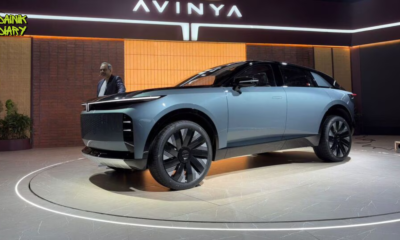
Upcoming models like the Tata Sierra EV and Avinya are expected to play a key role in pushing Tata Motors into both mass-market and premium EV categories.
Cost control: The real battlefield
Behind the technology push lies a critical focus on cost reduction. The company is working on:

Greater localisation of EV components- Consolidation of power electronics systems
- Improved battery pack architecture
- Higher integration of high-voltage systems
These steps aim to reduce dependency on imports while improving margins and strengthening supply chain resilience.
India’s EV market is changing fast
The timing of this strategy is crucial. India’s EV passenger vehicle market stood at around 220,000 units in FY26, with Tata Motors selling nearly 92,000 EVs, giving it over 40% market share.
However, the company expects the market to explode to 1–1.1 million units by FY31, driven by rising fuel prices, stricter emission norms under upcoming CAFE regulations, and improving charging infrastructure.
As Tata Motors notes, India is no longer in the early-adopter phase of EVs. The market is shifting toward the “early majority”—customers who demand affordability, reliability, and real-world practicality.
The road ahead
What makes Tata Motors’ strategy stand out is its dual focus: scaling aggressively while preparing for a post-subsidy world. Whether it can maintain dominance will depend on execution—especially as global and domestic competitors ramp up their own EV ambitions.
For now, one thing is clear: India’s EV future will be shaped not just by policy, but by how companies like Tata Motors navigate the transition from incentive-driven growth to true market-led profitability.