
Economy
E20 Petrol Hits Mileage Debate Again: “Yes, Fuel Efficiency May Drop a Little…” Puri’s Statement Sparks Fresh Fuel Controversy as India Eyes E100 Future
While the government admits a “minor drop” in mileage with E20 petrol, it continues pushing aggressively towards E25, E85, and even E100 fuel, calling it a long-term energy security strategy for India.


The debate around ethanol-blended petrol has returned to the spotlight after Union Petroleum Minister Hardeep Singh Puri acknowledged that vehicles running on E20 fuel may experience a “minor” drop in mileage—even as the government accelerates its push towards higher ethanol blends like E85 and E100.
Speaking on the ongoing nationwide rollout of ethanol-blended petrol under Ministry of Petroleum and Natural Gas, Puri said that while fuel efficiency may dip slightly, the trade-off is balanced by improved engine performance and smoother acceleration.
“Mileage, yes, it may drop a little… but it may improve acceleration and reduce engine knocking,” the minister was quoted as saying.
The statement comes at a time when E20 petrol has become the standard fuel across India, replacing earlier blends like E10 at most retail outlets. While the government frames this as a major step toward cleaner energy and reduced oil imports, consumers have increasingly raised concerns about reduced mileage and compatibility issues—especially in older vehicles.
Automobile experts and industry bodies, including SIAM and ARAI, were consulted before the E20 rollout. However, real-world usage has triggered debate, with reports suggesting fuel efficiency drops of around 2–4% under ideal conditions—and potentially more in older engines.
Read More- No more limits on petrol and diesel from July 1: Centre withdraws fuel purchase restrictions after supply improves
The government, however, continues to dismiss widespread concerns. Officials have repeatedly stated that claims linking E20 fuel to engine damage or breakdowns are “misleading and unsubstantiated,” arguing that no large-scale failures have been reported since its implementation.
Behind the controversy lies a much larger ambition: India’s ethanol roadmap. The Centre views ethanol blending as a critical pillar of energy independence, aiming to reduce crude oil imports and strengthen rural income through higher demand for sugarcane and grain-based ethanol. Reports suggest the E20 programme alone could save nearly ₹43,000 crore in foreign exchange annually.
But the bigger shift is still ahead.
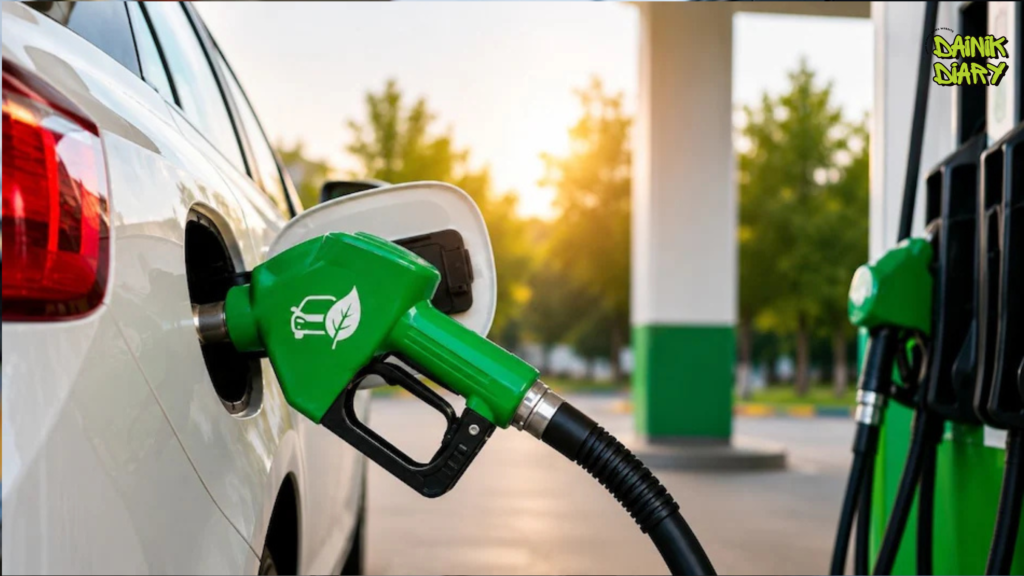
According to recent developments, testing has already begun for E25 petrol, while the government is simultaneously expanding its focus to higher blends like E85 fuel. The Indian Oil Corporation has begun rolling out E85 at select outlets, with plans to expand availability to thousands of fuel stations in the coming years.
E85, which contains 85% ethanol, is primarily designed for flex-fuel vehicles. Unlike standard petrol engines, these vehicles can adapt to varying fuel blends, marking a significant shift in India’s mobility ecosystem.
Looking further ahead, the government is also exploring E100 fuel (100% ethanol). Union Minister for Road Transport and Highways Nitin Gadkari has already supported its legal recognition, while Indian Oil has reportedly set up hundreds of E100 dispensing stations across the country.
However, experts caution that moving beyond E20 will require far more than fuel availability. Dedicated flex-fuel engines, widespread infrastructure upgrades, and clearer consumer communication will all be essential before higher blends become mainstream.
For now, the government appears focused on striking a delicate balance—acknowledging consumer concerns about mileage while continuing to push an ambitious clean fuel roadmap. And as India moves from E20 towards E85 and possibly E100, the real question is no longer about fuel efficiency alone, but whether consumers are ready to accept the trade-off between mileage and long-term energy independence.


