Business
Singapore Airlines Says Air India Transformation Is Finally Showing Results: Fleet, Service and Network Upgrades Gather Pace…
Singapore Airlines says Air India’s multi-year turnaround is making tangible progress as fleet renewal, aircraft retrofits and customer service improvements move forward, even as higher fuel costs weigh on the airline group’s finances.

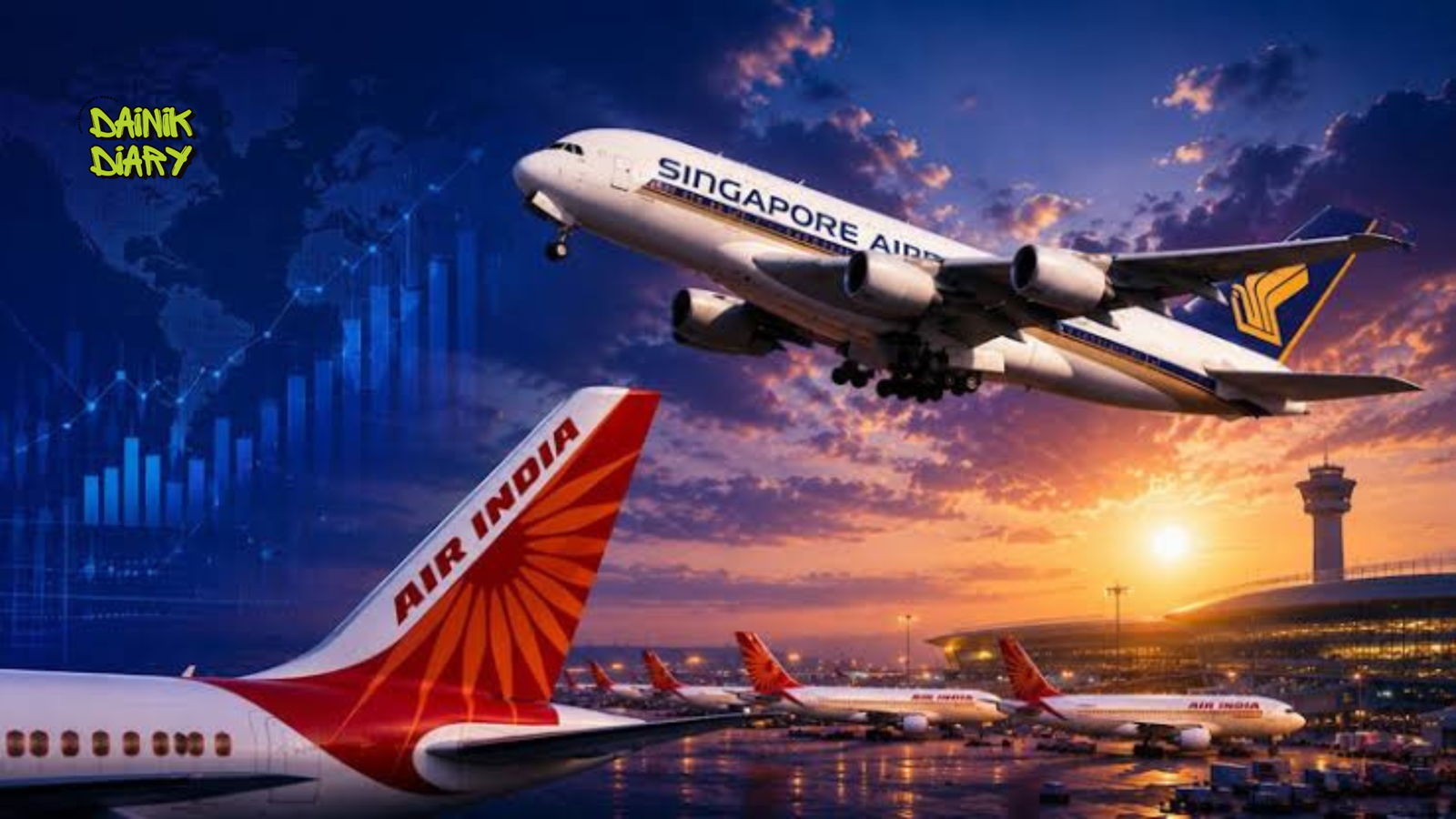
The transformation of Air India appears to be gaining momentum, with Singapore Airlines saying it has seen “tangible progress” in the airline’s fleet renewal, aircraft retrofit programme and improvements to both ground and in-flight services.
The comments came as Singapore Airlines released its financial results for the first quarter of fiscal 2026-27, highlighting the strategic importance of its investment in the Air India Group.
Singapore Airlines holds a 25.1 per cent stake in the Air India Group, making its partnership with Tata Sons a key part of its broader multi-hub strategy.
The Singapore-based carrier said both companies remain committed to supporting Air India’s long-term transformation.
“SIA and its partner Tata Sons are committed to Air India’s long-term success, and to working together to support its multi-year transformation programme,” the airline said in its latest financial report.
Fleet Renewal and Service Upgrades Take Centre Stage
Air India’s transformation has been closely watched since the airline returned to Tata Group ownership.
The latest comments from Singapore Airlines suggest that the process is moving beyond plans and into visible execution.
According to the airline, progress has been made in several key areas, including fleet renewal, aircraft retrofits, ground services, in-flight experiences and operational performance.
For Air India, these improvements are crucial as the carrier seeks to rebuild its position as a major international airline and compete more effectively with established global players.
The partnership with Singapore Airlines is expected to play an important role in that journey, bringing together the Tata Group’s ownership and Singapore Airlines’ aviation expertise.
Singapore Airlines and Air India to Deepen Partnership
The two airlines are also preparing to strengthen their commercial relationship.
Read More- India’s Airport Revolution Begins: Government Plans 44 Hubs and Spokes to Connect Smaller Cities to the World…
Singapore Airlines and Air India have agreed to expand cooperation in areas including network connectivity, codeshare arrangements and loyalty programmes.
The enhanced initiatives are expected to be introduced progressively during the year.
A deeper partnership could give passengers access to a broader network while allowing both airlines to strengthen their presence in important international markets.
For Air India, greater cooperation with Singapore Airlines could also help support its ambition to make India a stronger global aviation hub.
Strong Passenger Demand Helps Offset Industry Pressures
While Air India continues its transformation, Singapore Airlines itself reported strong demand for air travel during the April-June quarter.
The SIA Group, which includes Singapore Airlines and Scoot, carried a record 10.9 million passengers during the quarter, representing a 6.3 per cent increase from the same period a year earlier.
Group passenger load factor stood at 87.1 per cent.
The company also reported record quarterly revenue of US$5.714 billion, an increase of 19.3 per cent year-on-year.
Passenger revenue climbed 18.6 per cent to US$4.582 billion, while cargo revenue increased by 33.5 per cent to US$708 million.

The figures highlight the continued strength of international travel demand, even as airlines face rising operating costs and geopolitical uncertainty.
Fuel Costs Become a Major Challenge
The biggest pressure on Singapore Airlines’ financial performance came from fuel.
The airline group said expenditure increased 27.9 per cent to US$5.609 billion, largely because net fuel costs jumped by 78.5 per cent to US$2.253 billion.
The company said the conflict in the Middle East had contributed to a sharp rise in jet fuel prices, creating additional uncertainty for airlines.
Fuel remains one of the biggest expenses for carriers worldwide, and sustained higher prices can quickly affect profitability.
Singapore Airlines and Scoot have adjusted fares and cargo rates in an effort to offset some of the additional costs. However, the company acknowledged that higher ticket and cargo prices cannot completely absorb the impact of significantly more expensive fuel.
The airline also warned that a prolonged conflict could have wider consequences for supply chains, global trade and the broader economy.
Singapore Airlines Reports $76 Million Net Loss
Despite record revenue and strong passenger demand, the SIA Group reported a net loss of US$76 million for the April-June quarter.
This represented a year-on-year deterioration of US$262 million.
The group’s operating profit also fell sharply to US$106 million, down 73.8 per cent compared with the previous year.
The decline was primarily linked to the surge in fuel expenses.
However, the company’s fuel-hedging performance helped soften some of the impact. Singapore Airlines recorded a fuel hedging gain of US$376 million during the quarter, compared with a US$60 million loss in the same period a year earlier.
Air India’s Transformation Comes at a Crucial Time
The developments come at an important stage for Air India.
The airline is attempting to modernise its fleet, improve passenger experience and strengthen its international network while competing in an increasingly challenging global aviation environment.
The strategic relationship with Singapore Airlines could become an important part of that transformation.
For passengers, the most visible changes are likely to come through newer aircraft, refurbished cabins, improved service standards and an expanded route network.
At the same time, the airline industry continues to face challenges from fuel price volatility, geopolitical tensions, aircraft supply constraints and global supply-chain disruptions.
Singapore Airlines said its diversified network and dual-brand strategy with Scoot provide flexibility to adjust capacity as demand changes.
The group also pointed to its strong balance sheet, digital capabilities and workforce as key strengths as it navigates the uncertain environment.
A Bigger Aviation Ambition for India
The message from Singapore Airlines is ultimately positive for Air India.
The airline’s transformation remains a long-term project, but progress in fleet renewal, aircraft retrofits and service improvements suggests that the changes are beginning to take shape.
The next challenge will be maintaining that momentum while dealing with the realities of the global aviation business.
With Tata Sons backing the transformation and Singapore Airlines playing a strategic role, Air India is attempting to build something much bigger than a simple airline turnaround.
The ultimate goal is to create a stronger Indian aviation brand with the scale and network to connect the country more effectively with the rest of the world.
For now, Singapore Airlines’ latest assessment suggests that the journey is moving in the right direction—but there is still a long way to go.