
Business News
He Scored Just 51 in Maths, Quit ISRO and Built a $1.1 Billion Space Company — The Inspiring Rise of India’s Rocket Entrepreneur
From struggling in school mathematics to leading India’s first private rocket launch, Pawan Kumar Chandana’s extraordinary journey proves that determination can rewrite destiny and reshape a nation’s space ambitions.

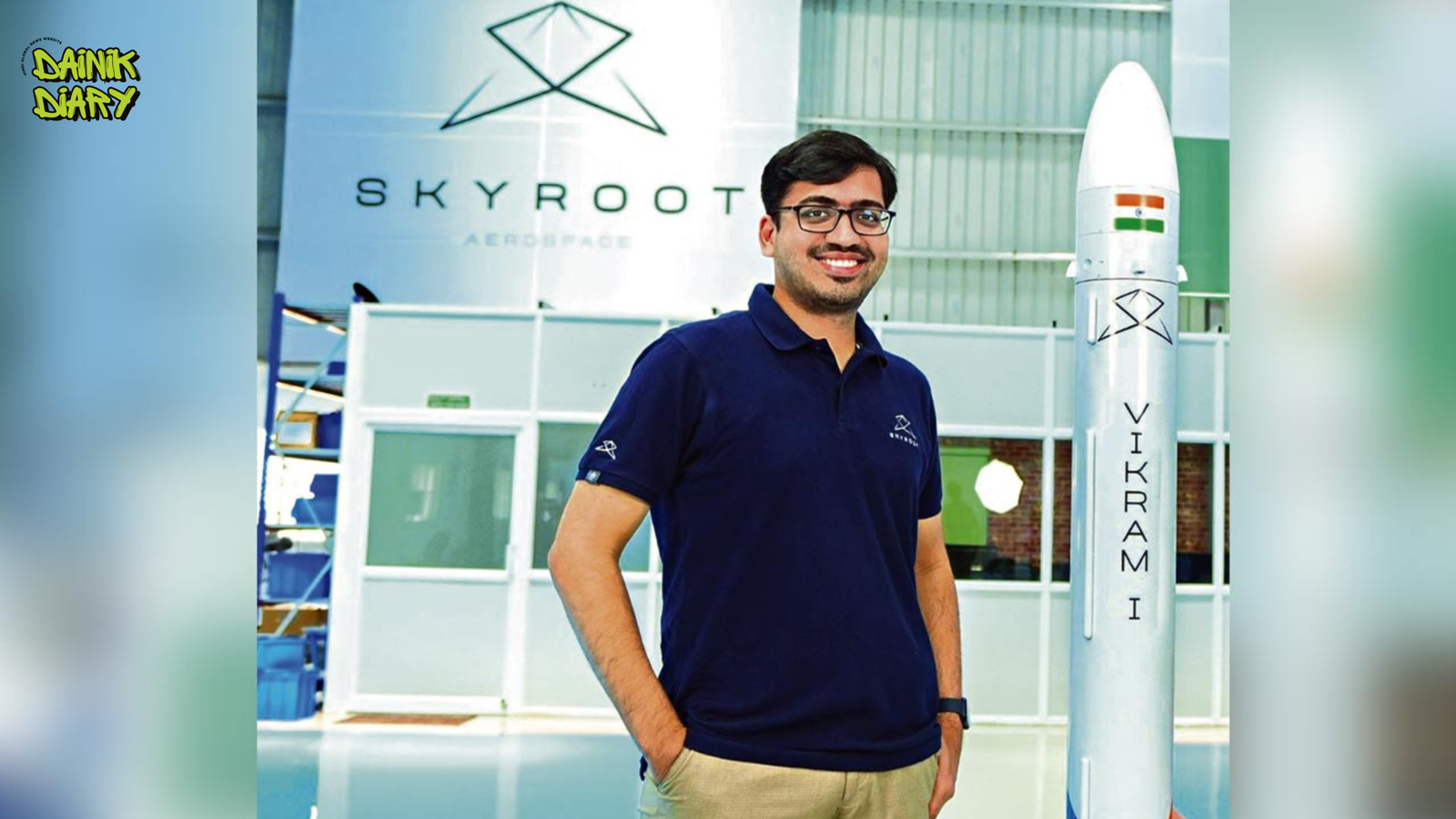
Success stories often begin with academic brilliance, but journey tells a different tale. Once a student who managed only 51 marks in mathematics, Chandana has now emerged as one of the most influential names in India’s private space industry, leading a company valued at nearly $1.1 billion.
His remarkable transformation from an ordinary middle-class student in Hyderabad to the founder of one of India’s biggest space startups is inspiring aspiring entrepreneurs and engineers across the country.
A Father’s Faith Changed Everything
Born in 1991 in Hyderabad, Telangana, Chandana developed a fascination for machines and technology at a young age. However, his school performance failed to reflect his passion.
The turning point came when his father refused to let poor marks define his future. Encouraged to prepare for IIT-JEE, Chandana gradually improved his understanding of mathematics and science. What started as exam preparation soon evolved into a deep interest in engineering and space technology.
His hard work paid off when he cracked IIT-JEE on his first attempt in 2007, securing admission to IIT Kharagpur, where he completed a dual BTech-MTech degree in Mechanical Engineering.
Choosing Rockets Over Corporate Comfort
While many graduates pursued high-paying corporate jobs, Chandana followed his childhood dream and joined ISRO in 2012 as a scientist.
Working at the Vikram Sarabhai Space Centre in Thiruvananthapuram, he contributed to several prestigious national missions, including the GSLV Mk-III, the S-200 solid booster, and India’s Small Satellite Launch Vehicle (SSLV) programme.
His innovative work even earned him an internal innovation award in 2016, establishing him as a promising scientist within the organisation.
The Bold Decision That Changed India’s Space Story
Despite a stable and respected career at ISRO, Chandana believed India’s private sector could play a major role in space exploration.
In 2018, he made the difficult decision to resign and launch his own venture without any prior business experience or strong investor network.
Finding early financial support was a challenge, but his vision attracted entrepreneur Mukesh Bansal, who invested $1.5 million after connecting with Chandana through LinkedIn.
The startup also survived fundraising hurdles during the COVID-19 pandemic, thanks to continued backing from investors who believed in India’s emerging space ecosystem.
Skyroot Aerospace Creates History
Together with former ISRO engineer Naga Bharath Daka, Chandana founded Skyroot Aerospace in Hyderabad in June 2018.
The company quickly made headlines by becoming the first private Indian company to successfully test a rocket engine in 2020. Its cryogenic engine, Raman-1, honoured Nobel laureate C.V. Raman.

After India’s space sector opened to private participation, Skyroot became the first startup to sign a formal agreement with ISRO, paving the way for greater collaboration between public and private space initiatives.
India’s First Private Rocket Launch Marks a Historic Milestone
The defining moment arrived on November 18, 2022, when Skyroot Aerospace successfully launched Vikram-S, India’s first privately developed suborbital rocket.
Launched from Sriharikota under Mission Prarambh, the rocket reached an altitude of nearly 90 kilometres, marking a new era for India’s commercial space ambitions.
The achievement placed Skyroot among a select group of global private space companies capable of building and launching rockets independently.
A Billion-Dollar Dream Taking Flight
Skyroot has continued expanding rapidly, establishing India’s largest private rocket manufacturing facility and building a workforce of nearly 1,000 employees.
In May 2026, the company secured $60 million in fresh funding from investors including Sherpalo Ventures and Singapore’s sovereign wealth fund GIC, pushing its valuation to approximately $1.1 billion.
The company is now preparing for the launch of Vikram-1, its first orbital launch vehicle. If successful, Skyroot could position India alongside nations that already have globally recognised private launch companies.
An Inspiration Beyond the Classroom
Pawan Kumar Chandana’s story is a powerful reminder that school marks alone do not determine success. His journey from scoring 51 in mathematics to building a billion-dollar space company reflects the impact of perseverance, learning, and believing in long-term goals.
As India’s private space sector gains momentum, Chandana’s success stands as proof that bold ideas and determination can propel ordinary individuals to extraordinary heights.