
Automobile
The Indian Maharaja who ordered a Rolls-Royce nobody was allowed to look inside
A custom-built Rolls-Royce for Maharaja Sawai Kishen Singh of Bharatpur blended royal luxury with strict privacy, creating one of the most unusual automobiles in automotive history.


The relationship between India’s royal families and luxury automobiles has produced some of the most remarkable stories in motoring history. From custom-built hunting vehicles to extravagant ceremonial cars, Indian maharajas were among the most influential clients of luxury manufacturers during the early twentieth century.
Among these extraordinary creations, one vehicle stands out for its unique purpose—a specially commissioned Rolls-Royce Twenty ordered by Maharaja Sawai Kishen Singh of Bharatpur in 1926. Unlike many royal automobiles designed for display and prestige, this car was built to ensure complete privacy for its passengers.
Often referred to as a “purdah car,” the vehicle was tailored to accommodate the social customs observed within many royal households of the era.
A Rolls-Royce Designed Around Tradition
During the British colonial period, luxury automobile brands such as Rolls-Royce frequently received highly personalised requests from Indian rulers. These ranged from custom interiors and hunting accessories to reinforced suspensions for rough terrain.
However, the Bharatpur Maharaja’s request was unlike most others.
At the time, women from several royal and aristocratic families followed the purdah system, a social practice that required them to remain shielded from public view. While traditional horse-drawn carriages could provide such privacy, modern automobiles posed a challenge because of their large windows and open visibility.
To address this concern, Rolls-Royce engineers created a vehicle that preserved privacy without compromising comfort.
Ingenious Modifications for Complete Privacy
The specially commissioned car featured several innovative modifications.
The vehicle was fitted with dark blue-tinted glass panels across its doors and partitions, making it extremely difficult for outsiders to see inside the cabin.
Additionally, engineers incorporated a retractable perforated metal screen that allowed fresh air to circulate through the vehicle while maintaining complete discretion for passengers.
The design also served a practical purpose. The screened openings helped keep insects and dust away during long journeys on India’s often rugged and dusty roads.
These modifications ensured that royal women could travel comfortably while still observing the customs expected of the time.
A Symbol of Royal Innovation
The Bharatpur Rolls-Royce became more than just a luxury vehicle. It represented a fascinating fusion of modern engineering and traditional social practices.
ALSO READ : Maruti Suzuki FRONX Is Winning Over SUV Buyers… What’s The Secret Behind Its Rapid Rise In India?
Rather than abandoning established customs, the Maharaja adapted cutting-edge automotive technology to suit the cultural realities of princely India.
This ability to customise vehicles according to individual needs was one of the reasons Rolls-Royce became a favourite among India’s rulers.
Many princely states commissioned bespoke automobiles equipped with features such as gun racks for hunting expeditions, custom luggage compartments, ceremonial seating arrangements and elevated ride heights designed for difficult terrain.
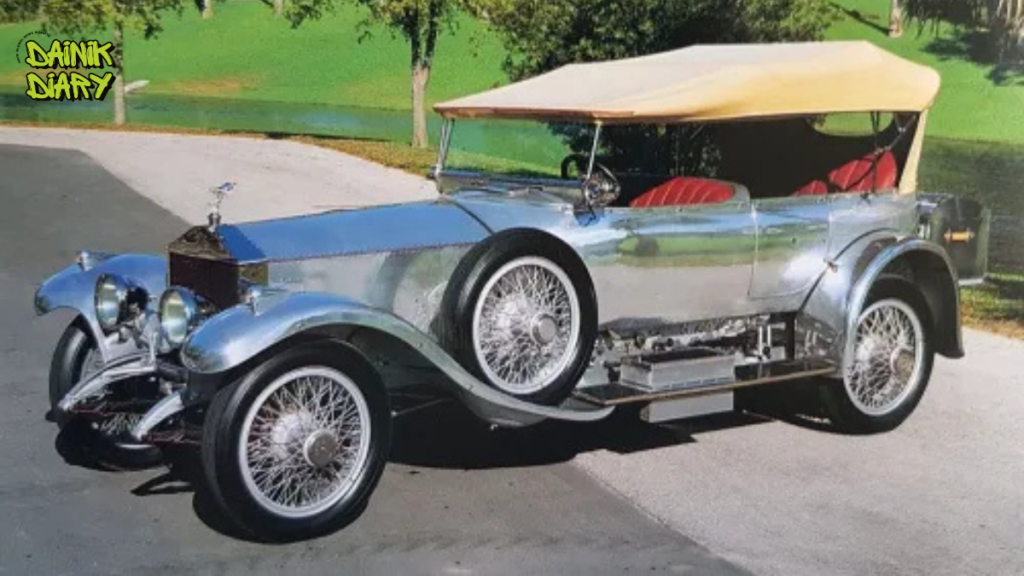
Yet the Bharatpur “purdah car” remains one of the most culturally significant examples because it was designed around privacy rather than prestige alone.
A Unique Chapter in Automotive History
Today, the story of Maharaja Sawai Kishen Singh’s Rolls-Royce offers a fascinating glimpse into a bygone era when automobiles reflected not only wealth and status but also the traditions and lifestyles of their owners.
The vehicle serves as a reminder that luxury cars were often far more than transportation tools. In the hands of India’s royal families, they became expressions of identity, culture and innovation.
Nearly a century later, the Bharatpur Maharaja’s custom Rolls-Royce continues to stand as one of the most unusual and intriguing automobiles ever created—one designed so elegantly that the world could admire it, but never see inside.


Pingback: JLR Changes Course: Defender Sport To Arrive With Hybrid And Electric Power, US Expansion In Focus - Dainik Diary - Authentic News